How a Fallen Log Becomes a Forest-Floor Habitat
Learn how a fallen log supports fungi, invertebrates and seedlings, and read its changing habitat from bark, moisture and contact with the forest floor.
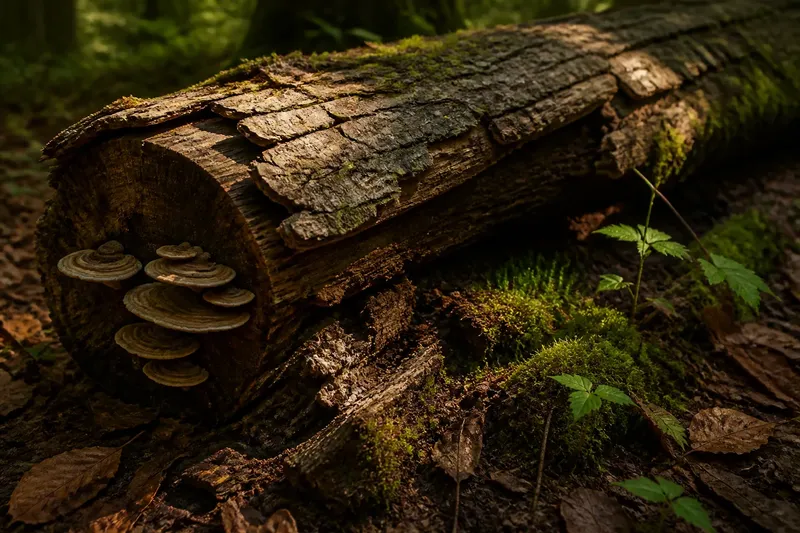
A fallen log can hold a dry, sunlit surface above a damp underside where fungi and small invertebrates find different conditions. A fallen log forest floor habitat is not one uniform place: bark, cracks, soil contact and shade create a patchwork of niches that changes as the wood breaks down.
The pattern depends on the tree, its position and the local conditions, so logs do not follow one fixed sequence. Read the wood as a set of connected habitats, from attached bark to softened fragments blending into leaf litter.
Bark as shelter
Attached bark can shield narrow spaces from sun and drying air. Look for naturally lifted edges, crevices and sheltered undersides without pulling the bark away; these spaces may shelter invertebrates or show traces such as webbing and fine debris.
Compare the exposed top with a shaded side. A dry upper surface can sit above damp wood, so a single glance at the trunk may miss the contrasting conditions that shape its occupants.
Cracks and fungal growth
As bark loosens and the wood splits, cracks provide further shelter and fungi may grow on the exposed surfaces. Fungi help break down dead wood, while some invertebrates use the wood or fungal growth as food or habitat.
Note a fungus’s shape, colour and position: on a cut end, in a crack or along a surface facing the ground. A shelf or coating is a visible clue, not a complete picture of what is happening inside the log. Avoid scraping or collecting it.
Holes, loose fragments and galleries can point to activity, but they do not identify an animal on their own. Look for several visible clues in context rather than treating one mark as a species label.
Wood meeting soil
Where a log touches the ground, moisture and leaf litter can gather against softened wood. Moss may cover damp patches, and roots or seedlings can occupy hollows or the material beside the trunk.
Notice the boundary between wood and soil. A log raised above the ground offers different conditions from one partly embedded in leaf litter, and even a single trunk may have both situations at its ends.
As the wood softens, fragments can mix into the forest floor. Fungi, roots, invertebrates and weather all contribute to change; seedlings growing nearby do not mean that the log has stopped decaying.
Reading a fallen log habitat?
What does a fungal shelf tell me?
It shows that a fungus is growing on the wood, but its appearance alone cannot reveal the log’s full condition or identify every organism using it. Note where it grows and whether nearby wood is cracked, damp or softened.
Do holes mean insects are inside?
Holes may indicate past or present animal activity, but they do not establish who made them or whether anything remains inside. Observe the opening and nearby debris without probing it.
Why do plants grow on a fallen log?
Softened wood, moss and accumulated leaf litter can offer a moist, stable place for a seedling. Check visually whether the plant appears rooted in the wood, in material collected on top or in soil alongside it.
Should I turn over a log?
No. Turning or breaking wood can destroy shelter and expose organisms to conditions they were avoiding. Use naturally open gaps and visible surfaces instead.
Compare conditions carefully
When looking at more than one log, compare the same features rather than relying on how old or decayed the wood appears. Check bark cover, shade, dampness, soil contact and visible growth; each can help explain why the logs support different patches of life.
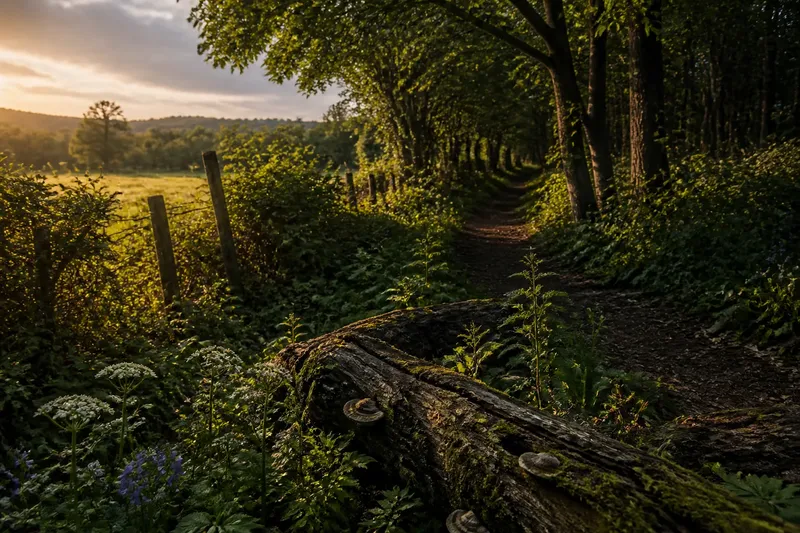
Say you encounter a bark-covered log beside a woodland path, with one end raised and the other resting in leaf litter. First, note the attached bark and the difference in position; next, compare the exposed top with the shaded side and observe the ground-contact end for moss or fungal growth. The resulting record distinguishes a raised, more exposed section from a sheltered, soil-contacting one without assuming either end contains a particular species.
- Check bark cover: if bark remains attached, look for naturally visible crevices; if it is absent, compare exposed cracks without scraping them.
- Check shade: if the log is shaded, look for damp surfaces and sheltered growth; if it is exposed, note whether the upper wood appears drier and compare it with any shaded side.
- Check soil contact: if the trunk touches leaf litter or soil, look for moss and softened fragments; if it is raised, inspect visible gaps beneath it from a safe position instead.
- Check the wood’s surface: if cracks or loose fragments are visible, note their position and look for nearby fungal growth; if the surface is firm and closed, focus on bark edges and other exposed clues.
- Check for fungi: if a shelf or coating is present, record its shape and location without touching it; if none is visible, do not infer that the wood has no fungal activity.
- Check for seedlings: if a plant appears on the log, note whether it grows from wood, collected litter or adjacent soil; if its rooting point is hidden, leave the identification of its growing surface uncertain.
Keep the wood intact
Stay on a firm surface, and do not lean on or step across a soft or unstable trunk. Leave bark, fungi and fragments in place; if a fallen tree obstructs a route or seems unsafe, follow the site’s marked route or contact its land manager.
On another visit, compare one visible feature, such as the growth at a soil-contacting end, with what you noted before. That small comparison can show how a fallen log forest floor habitat changes while keeping its hidden shelter undisturbed.