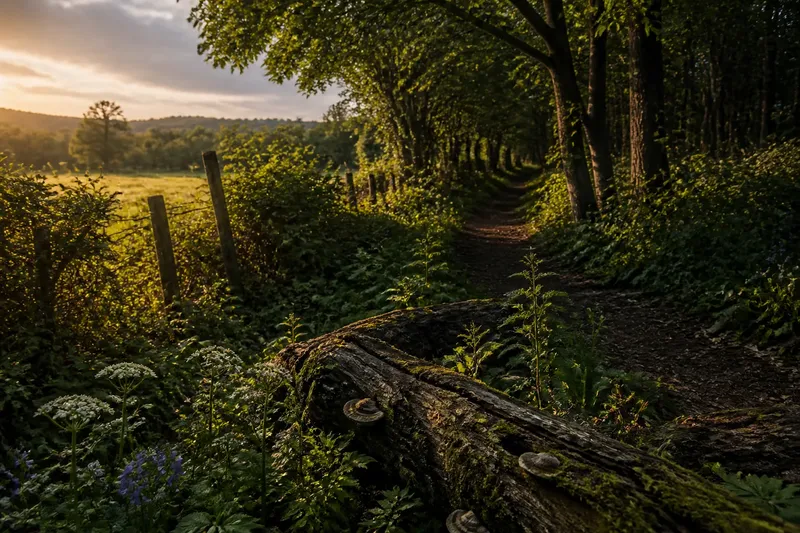
Why Leaves Grow in Such Different Shapes
Why leaves grow in such different shapes reflects light, water and growth habits. Learn what a leaf can suggest—and what it cannot prove.
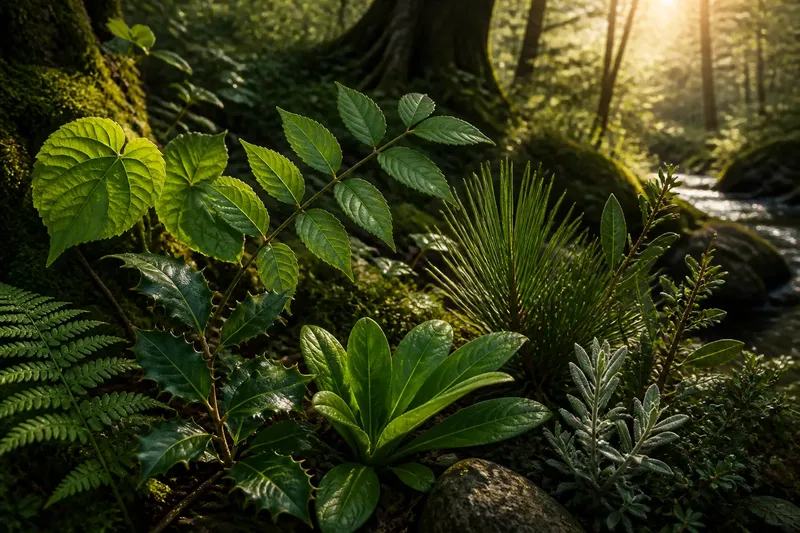
Why leaves grow in such different shapes becomes easier to understand when you look beyond the outline. A broad, flat leaf and a narrow, tough one meet different conditions, but neither shape tells the whole story of a plant’s life.
Leaf form develops through several influences acting together: the light reaching a plant, the water available to it, the way its shoots grow and the features inherited from its lineage. These links help explain patterns in the field, provided you treat a leaf as a clue rather than a verdict.
What counts as leaf shape
Start with the blade, the broad part of a leaf. Its outline may be oval, heart-shaped, needle-like, lobed or divided into separate leaflets. The edge can be smooth, toothed or wavy, while the tip may be blunt, rounded or sharply pointed.
Other features matter too. A leaf may be thick or thin, stiff or flexible, glossy or hairy; its veins may run in parallel or branch through a net-like pattern. Two leaves can share a similar outline yet differ markedly in thickness, surface and attachment to the stem.
It also helps to distinguish a simple leaf from a compound one. A simple leaf has one blade, even if that blade is deeply lobed. A compound leaf is divided into leaflets attached along a shared stalk, as in many ash trees. That distinction can matter for identification, but it does not by itself explain the plant’s habitat.
Shape is therefore a set of visible features, not a single design choice. A field observation becomes more useful when you note the outline alongside the leaf’s position, texture and the conditions around the plant.
Light and leaf area
Light affects how much surface a plant can expose for collecting energy. In shaded places, a broad, relatively thin blade can intercept light across a wide area. This is one reason shade-grown leaves may look larger or more delicate than leaves on the same kind of plant growing in brighter conditions.
In open, sunny ground, smaller or more divided leaves are common among some plants. A reduced blade can limit direct exposure, while leaflets separated by gaps may let air move between them. These traits can help a plant cope with intense light and warmth, though they are not a universal recipe: many sun-loving plants have broad leaves, and plenty of shade plants do not.
Compare leaves only with their setting in view. A large leaf beneath a hedge may be a response to low light, or it may simply be typical of that species. The plant’s age, position on a shoot and recent growing conditions can also affect its size.
Notice whether leaves face the sun, overlap one another or sit at different angles. These arrangements change which blades receive light, so the same plant can present a varied canopy without every leaf having a different basic shape.
Water and leaf surfaces
Water supply influences leaf form and surface. Plants in dry, exposed places often have leaves that are small, narrow, thick, waxy or covered in hairs. Such features can reduce water loss or shield delicate tissues from heat and wind. A succulent leaf, by contrast, stores water in fleshy tissue rather than relying on a narrow outline alone.
Plants in reliably moist places may carry broad, thinner leaves. But moisture is only part of the setting: a woodland floor can be damp and shaded, while a sunny bank beside a stream can be bright and exposed. Soil, drainage, wind and the plant’s access to water all shape the conditions a leaf experiences.
Some leaves have pointed tips that help water run off, a familiar feature in plants from wet tropical habitats. Yet a pointed tip is not proof that a plant comes from a wet climate. The same outline can occur for other reasons, and rainwater movement depends on more than the tip alone.
Look for a combination of clues. A small, leathery blade growing in dry gravel may fit a water-conserving strategy; the same blade on a plant in a shaded garden bed has a different context. Neither observation identifies the cause on its own.
Growth habits and trade-offs
Leaves are attached to a plant that has to support, position and replace them. A climbing plant may spread broad blades across a support or into a gap in the canopy. A low-growing rosette keeps its leaves close to the ground, where their shape and arrangement help them occupy space without a tall stem.
Needles and other narrow leaves are often associated with plants that keep foliage through cold or dry seasons. Their small exposed surface can limit water loss, and their firm structure can withstand conditions that would damage a tender blade. This does not mean every needle-shaped leaf serves one purpose or that all plants with narrow leaves share the same growth strategy.
Leaf shape also carries costs. A very broad blade can collect light effectively but may be more vulnerable to wind, tearing or water loss. A narrow blade may be durable in an exposed place but collect less light across its width. Plants balance these pressures through a mix of leaf size, thickness, placement and the timing of new growth.
Imagine a young plant growing at the edge of a garden wall. If its first leaves are broad and thin, that may reflect sheltered conditions and available light; if a later shoot grows into a sunny, windy opening, its new leaves might be smaller or tougher. The visible difference would be a useful observation, not proof that light alone caused it.
Reading leaf clues?
Can leaf shape identify a plant?
It can narrow the possibilities, especially when you combine the outline with leaf arrangement, veins, stem features, flowers or fruit. Many unrelated plants have similar leaves, so confirm an identification with a regional field guide or a trusted identification key rather than relying on shape alone.
Why do leaves differ on one plant?
Leaves can vary with age, position and exposure. A lower, shaded leaf may be broader or thinner than a leaf higher on the same plant, while young growth can look unlike mature foliage.
Does a broad leaf mean a wet habitat?
Not necessarily. Broad leaves can be useful in shaded conditions, but water supply, wind, temperature and inherited traits also matter; a plant’s setting is more informative than one feature in isolation.
Can a leaf reveal the plant’s age?
A leaf can show whether it is young, mature, damaged or ageing, but it cannot reliably tell you how old the whole plant is. Leaves are replaced at different rates, and growth varies with species and conditions.
What one leaf cannot prove
A leaf does not reveal a complete habitat, a precise climate or a single cause for its shape. Similar forms can evolve in different plant groups, and close relatives may grow differently when conditions change. A shape that looks adapted to drought may also reflect ancestry or the way the plant develops.
Avoid turning a useful association into a rule. “Narrow leaves often reduce exposed area” is a cautious observation; “this plant has narrow leaves, therefore it lives in a desert” is an unsupported leap. The first leaves room for other evidence, while the second ignores it.
When observing outdoors, record what you can see: the blade’s outline and texture, where it sits on the shoot, whether the plant is shaded or exposed, and whether the ground seems dry or damp. If you are comparing plants, compare similar parts at similar stages rather than a fresh leaf with an old, weathered one.
Return to the plant after conditions change, such as after new growth appears or surrounding vegetation is cut back. A developing set of leaves may reveal how the plant responds to its immediate setting. The comparison will still not isolate one cause, but it can show which traits stay consistent and which vary.
Reading a whole plant
Why leaves grow in such different shapes has no single answer: light, water, growth habit and inherited form all contribute, often at once. A leaf is most informative when you read it alongside the plant’s position, the surrounding habitat and other visible traits.
For a useful field note, describe before you explain. Write “small, stiff leaves on an exposed bank” before deciding that they conserve water; then check whether the soil, wind and nearby plants support that interpretation. Keeping observation separate from inference makes the next walk more revealing, because you know exactly which part of your explanation still needs another clue.