Tracks, Droppings, or Nibbled Leaves: Which Clue to Read First?
Learn how to read animal tracks, droppings and nibbled leaves in sequence, judge what each can tell you, and keep useful wildlife notes without disturbing signs.
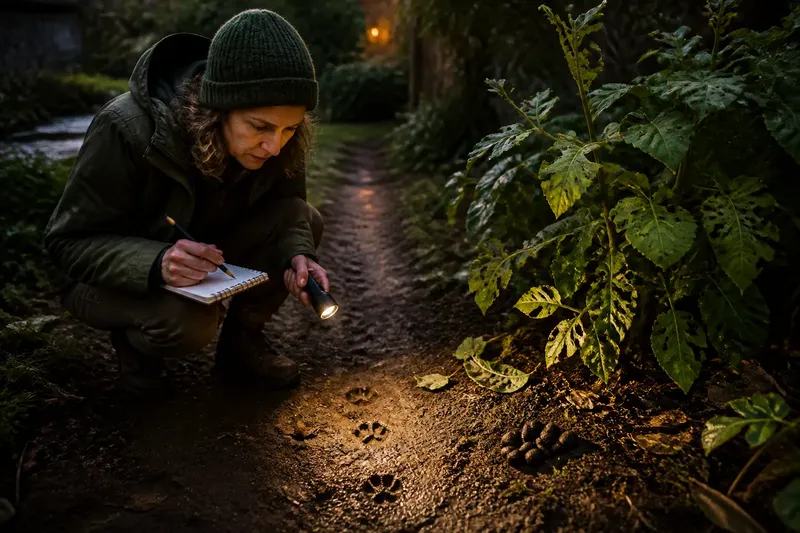
Animal tracks, droppings and nibbled leaves each preserve different clues, so read the clearest, most easily disturbed sign first. To decide which animal clue to read first, check the ground and surrounding plants before stepping closer; one striking mark rarely tells the whole story.
Start with the setting
Pause where you noticed the sign and scan the surrounding ground, plants and routes through the vegetation. A muddy path beside a stream suggests different possible visitors from a dry garden border, but neither setting identifies an animal.
Note nearby cover, water, openings and the surface beneath the clue. These details help you describe what you see and assess whether signs might connect; they are context, not proof.
Read tracks before they fade
If a sequence of clear prints is visible, inspect it before walking nearby. Note the direction, repeated marks and whether the trail appears to lead towards cover or feeding vegetation. A sequence generally offers more context than one isolated impression.
Describe the surface as well as the print. Soft mud, loose soil, damp sand, leaf litter and snow preserve edges differently; rain, wind and other passing animals can blur them. Record visible features such as rounded or elongated shapes, distinct toes or indistinct edges, and leave missing details unresolved.
If the ground is heavily disturbed, write that down and move on to another clue. “Several shallow impressions in wet soil” is more useful than a species name based on a smudge.
Read droppings from afar
Droppings may show that an animal used a place, but their appearance changes with diet, weather and age. Other material can also look similar from a distance, so avoid naming a species from appearance alone.
Note the location and broad appearance without touching or moving anything. Check whether the sign is near a route, feeding area or exposed patch, and compare that setting with other observations. Use a camera’s zoom if a closer view would help; keep children and dogs away. If contact raises a health concern, seek qualified advice.
Compare leaf damage
Look across several leaves and nearby plants rather than focusing on one torn edge. Record whether the damage is ragged, consists of holes within the blade or involves a missing young shoot. Compare it with untouched growth on the same plant, without removing a leaf.
Weather, disease and non-animal damage can change leaves too. Even when feeding seems likely, the pattern may not identify the feeder; look for other signs and keep the cause open if they do not support a clear interpretation.
Connect signs cautiously
Tracks leading towards a plant with fresh damage may suggest a link between movement and feeding; nearby droppings may add context. Before treating them as one sequence, consider whether weather and the condition of each sign make it plausible that they appeared at a similar time.
Imagine you find indistinct impressions in damp garden soil beside a shrub with torn leaves. From the path, you note the prints’ direction, the type of leaf damage and the space between them, then take a context photograph without stepping closer. The impressions do not clearly lead to the shrub, so your record says “possible animal activity; identity and connection unclear” rather than naming a species.
Make a useful field note
Separate what you saw from what you think it means. A notebook and pencil are enough; a phone camera can preserve the wider setting if you can use it without disturbing the signs.
- Check the surface: if prints have clear edges in soft ground, record their visible shape and direction; if they are blurred or trampled, note the disturbance and do not identify an animal from them.
- Check for a sequence: if repeated prints form a visible route, describe where it leads; if only one partial mark remains, record it as isolated.
- Check the droppings’ position: if they are beside a route or feeding area, record that context from a distance; if their location offers no clear link, keep them as a separate observation.
- Check leaf damage across the plant: if several leaves show a similar pattern, describe that pattern; if damage is isolated or mixed, avoid assigning it to a feeder.
- Check whether signs could be connected: if their condition and setting make a shared visit plausible, record the link as a possibility; if timing is unclear, keep each sign separate.
- Check the photograph’s frame: if it shows the mark and its surroundings, keep it as a context image; if it is only a close crop, add a wider view from where you stand or rely on written notes.
- Check for disturbance: if your route would cross a sign or risk disturbing an animal, stop and observe from where you are; if you cannot see safely, leave without a closer record.
Keep descriptions plain: “shallow prints in wet soil beside a shrub with torn leaves” says what is visible. Add “possibly connected” only when the signs plausibly fit together, and preserve uncertainty when they do not.
Which clue comes first?
Are tracks the best first clue?
Read a clear track sequence early because walking through it can erase its direction and nearby impressions. If the surface is too disturbed to interpret, record that limitation and look at the setting instead.
Can droppings identify an animal?
Droppings can contribute to an identification, but appearance alone is rarely enough for a confident name. Note them from a distance and compare their setting with other signs.
What do nibbled leaves tell you?
They show that the plant has changed and may indicate feeding, but the damage pattern does not reliably identify the cause by itself. Compare nearby growth and consider weather, disease and other possible explanations.
Should you touch a track or dropping?
No. Observe and photograph from a safe distance, and leave signs undisturbed; seek qualified advice if contact raises a health concern.
Keep the identification open
For tracks, droppings or nibbled leaves, a careful description can be a better result than a species label. When deciding which animal clue to read first, preserve the track sequence if it is clear, then compare the other signs without treating proximity as proof.
On your next walk, record one visible detail and one reason it might mislead you. That brief note sharpens your observation while leaving the place and its signs as you found them.